RSI
Type: Momentum oscillator
Best for: Stable momentum context
Strength: Cleaner read with less noise
Limitation: Can react more slowly than Stochastic RSI
 Consensus Engine
RSI and Stochastic RSI are closely related crypto indicators, but they are not the same tool. This guide explains how they differ, what each one helps with, and why traders often choose between them based on sensitivity and context.
RSI measures momentum directly from price changes, while Stochastic RSI applies a stochastic formula to RSI itself. That makes Stochastic RSI more reactive to short-term changes.
Because one tool is smoother and the other is more sensitive, traders often compare both when they want to balance stability with faster momentum signals.
Type: Momentum oscillator
Best for: Stable momentum context
Strength: Cleaner read with less noise
Limitation: Can react more slowly than Stochastic RSI
Type: Momentum oscillator derived from RSI
Best for: Short-term momentum swings
Strength: Faster and more sensitive response
Limitation: Can generate more noise
RSI helps traders evaluate momentum without overreacting to every short-term fluctuation. It is commonly used for overbought and oversold context, divergence, and momentum weakening.
Its main limitation is that it may not show smaller short-term momentum turns as quickly as a more sensitive oscillator.
Stochastic RSI helps traders spot faster momentum changes because it is more sensitive than standard RSI. It is often used for quick reversals, short-term resets, and more reactive oscillator signals.
Its limitation is that the added sensitivity can also create more false starts, especially in choppy conditions where short-term momentum keeps flipping.
There is no universal winner because the choice depends on the type of read a trader wants. RSI is often better when cleaner momentum context matters more than speed, while Stochastic RSI is often better when traders want a faster short-term signal.
That is why many traders choose between them based on timeframe, volatility, and how much signal sensitivity they are comfortable with.
Using both can help separate broader momentum structure from very short-term oscillation. RSI may provide the steadier context, while Stochastic RSI may show quicker internal shifts.
When traders compare both instead of relying on only one oscillator, they can judge whether a fast signal is supported by broader momentum. For a broader workflow, see how to combine crypto indicators, review the crypto consensus indicator, or explore the crypto indicator dashboard.
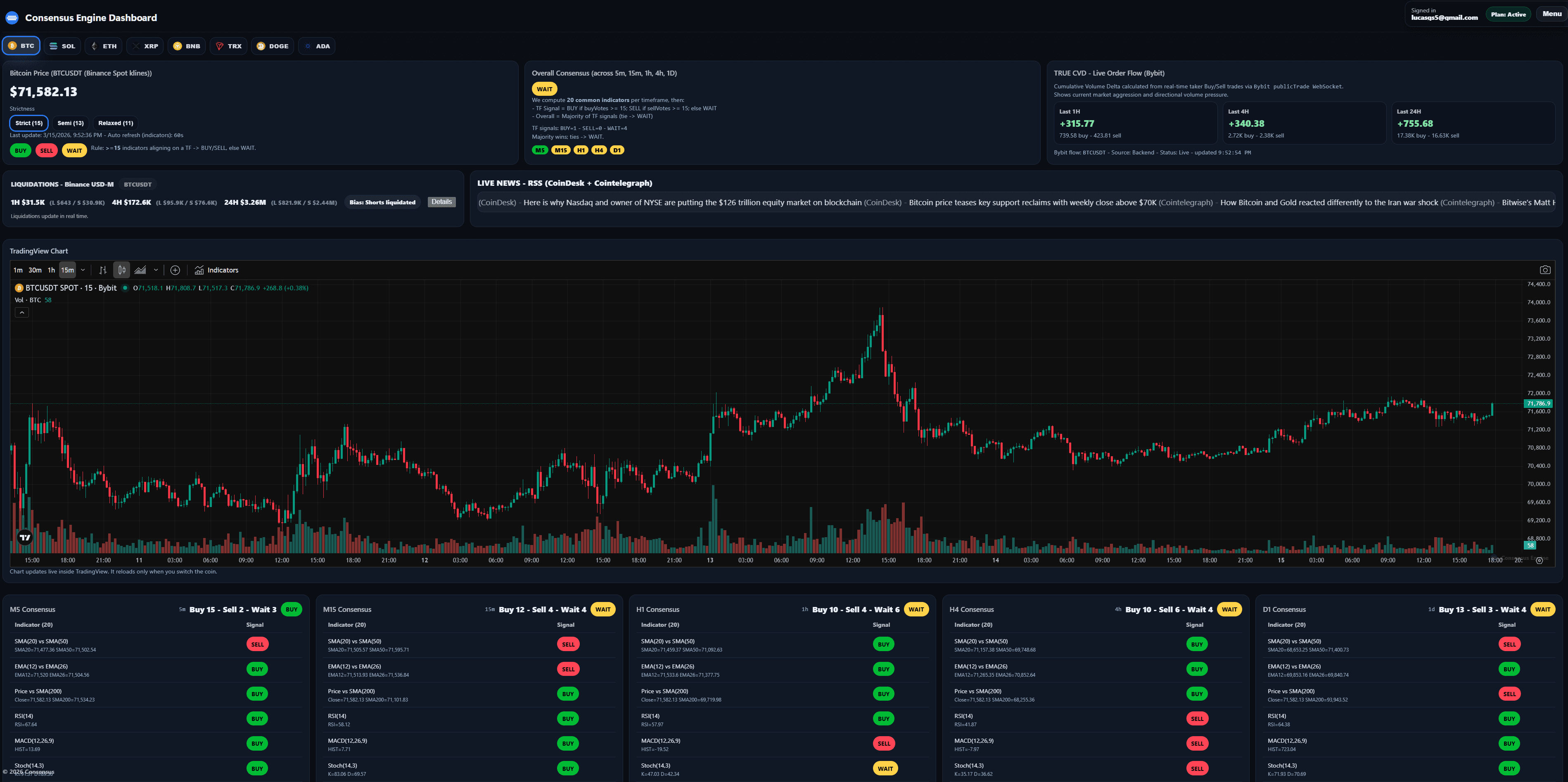
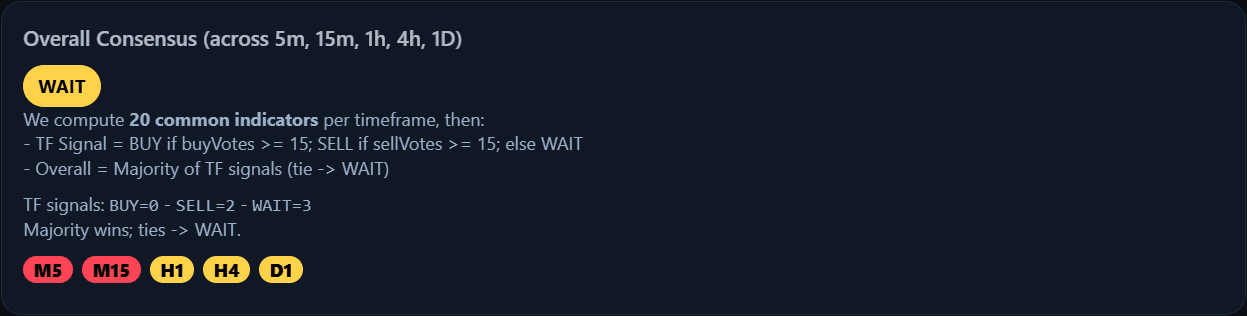
Consensus Engine is built for this exact problem. Instead of forcing traders to compare RSI, Stochastic RSI, and other signals one by one, the dashboard organizes 20 indicators across 5 timeframes into one structured market view.
That makes it easier to judge whether fast oscillator readings are supported by broader alignment instead of being read in isolation.
Keep different signal types together so agreement, conflict, and confirmation are easier to read.
Compare short-term movement with broader structure across M5, M15, H1, H4, and D1 in one workflow.
Use TRUE CVD when you want another read on whether participation is supporting the move.
Neither is universally better. RSI is usually smoother, while Stochastic RSI is usually more sensitive to short-term momentum changes.
Yes. Stochastic RSI is generally more reactive than RSI, which is why it can show short-term swings faster but also create more noise.
Yes. Some traders use RSI for broader momentum context and Stochastic RSI for shorter-term timing and sensitivity.
Yes. The Quick Preview shows a limited blurred view with a short live preview of the selected crypto.
Consensus Engine helps traders organize RSI, Stochastic RSI, and other signals into one clean dashboard.
Start with the broader guide to indicator categories, use cases, and limitations.
Review the indicator types traders compare most often when building a market view.
See how traders use different indicator roles together instead of relying on one signal.
Learn how Consensus Engine summarizes multiple technical readings into a structured view.
Explore the main product guide for the dashboard that organizes alignment across signals and timeframes.