Consensus at the core
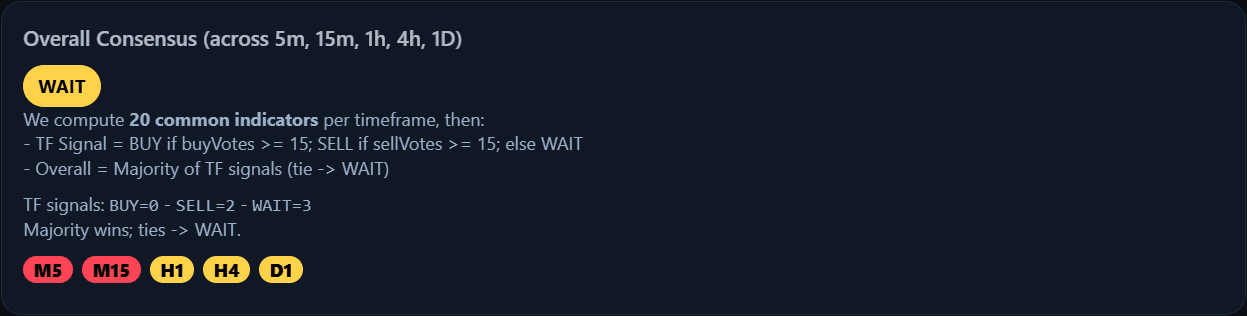
The consensus panel summarizes how multiple signals vote across timeframes, helping traders see whether the market is leaning bullish, bearish, or still mixed.
 Consensus Engine
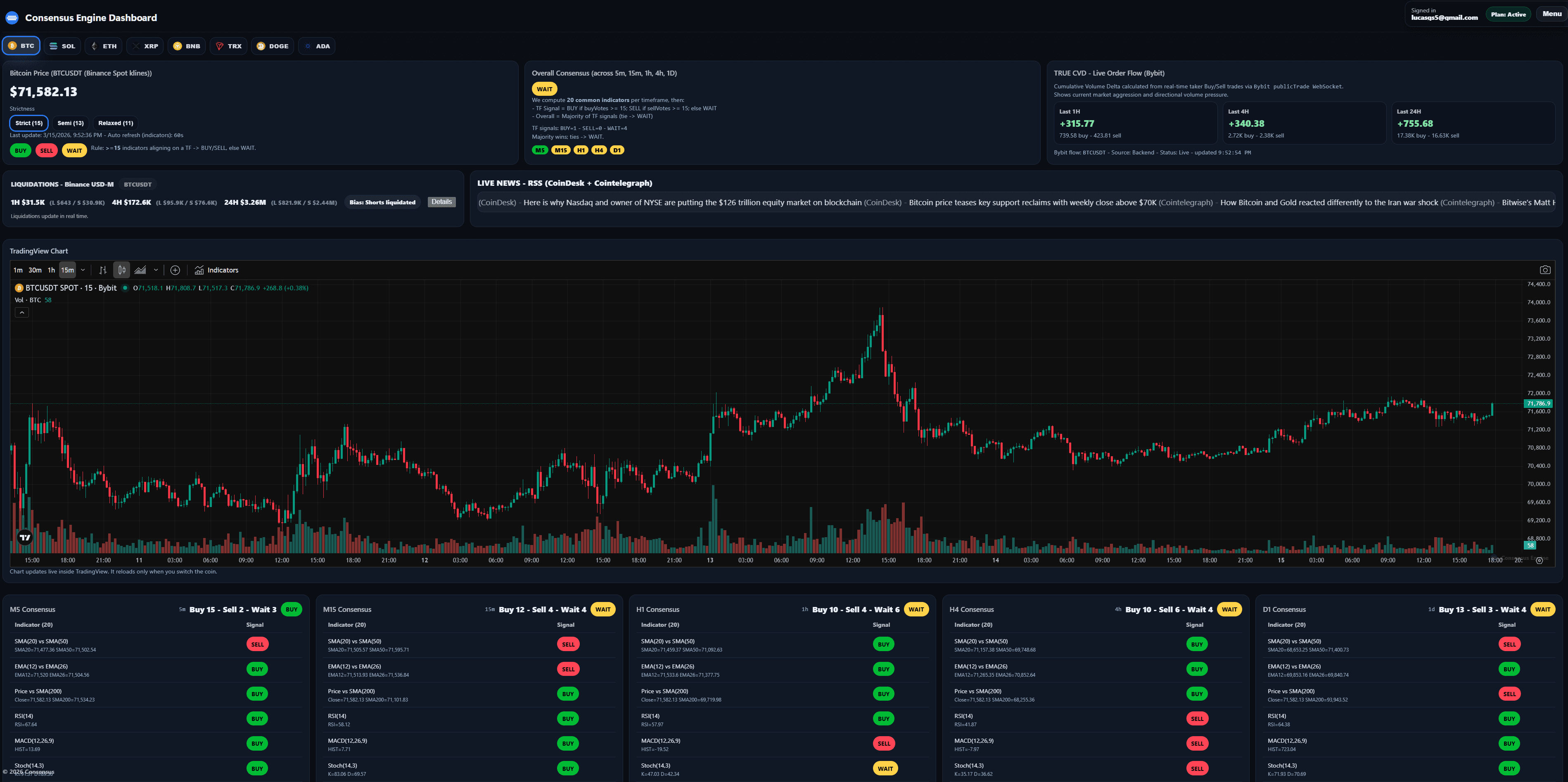
Consensus Engine uses a multi-indicator consensus model to help traders identify when market conditions are aligned. Instead of relying on one indicator alone, the dashboard evaluates 20 indicators across 5 timeframes and summarizes the result clearly inside a crypto indicator dashboard.
The dashboard is designed to turn many overlapping technical signals into a clearer market reading that traders can interpret more quickly.
A consensus indicator is an approach that combines multiple technical signals into a single reading instead of depending on one indicator alone. This can help traders reduce noise and focus on stronger market alignment. If you want to see how that translates into signal review, the trading signal dashboard gives that broader workflow.
Consensus Engine does not depend on one trigger. It uses multiple layers so traders can read agreement, disagreement, and uncertainty more clearly.
The consensus panel summarizes how multiple signals vote across timeframes, helping traders see whether the market is leaning bullish, bearish, or still mixed.
Individual indicator panels show what is contributing to the broader consensus so traders can inspect the makeup of the signal instead of trusting a black box.
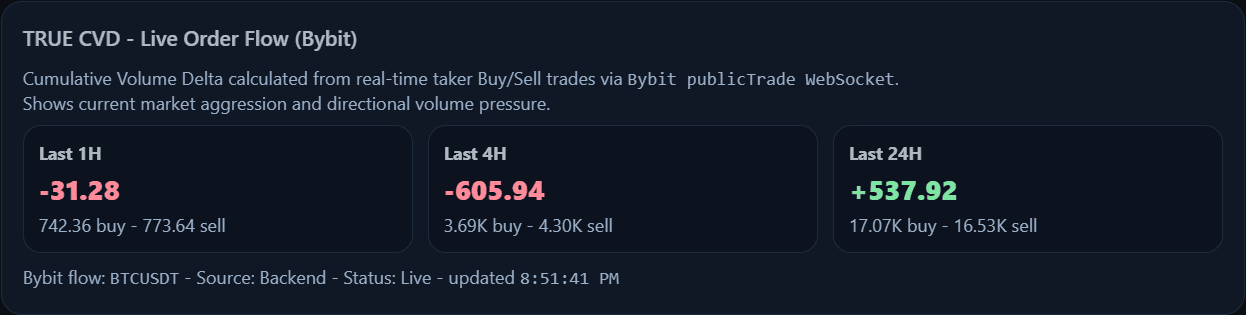
TRUE CVD can be used alongside consensus when traders want extra confirmation that the move has supporting participation behind it.
News and liquidations add a surrounding context layer so consensus is interpreted inside real market conditions rather than in a vacuum.
The dashboard uses a practical consensus workflow so traders can move from raw signals to a cleaner interpretation without depending on one indicator alone. Traders comparing alignment across horizons can also review the multi-timeframe trading dashboard.
Consensus is formed by combining many technical signals rather than expecting one indicator to explain the whole market.
Each timeframe has its own vote structure, helping traders see where alignment is stronger and where the market is still conflicted.
TRUE CVD can be layered on top when traders want another confirmation input alongside the consensus reading.
The goal is not more complexity. The goal is to help traders interpret whether the market is aligned, opposed, or not clear enough yet.
A trader can use the dashboard to judge whether multiple signals are actually aligned before treating the setup as stronger.
Start with the overall consensus view to see whether the market is leaning clearly in one direction or still producing mixed signal behavior.
Compare the vote across timeframes to see whether the signal is broad enough to matter or limited to one short-term pocket.
Use participation and market context panels to avoid treating every consensus reading as equally strong in every market condition.
A consensus indicator combines multiple technical signals into a single market reading so traders can evaluate agreement across indicators rather than relying on one tool alone.
A single indicator can be useful, but it can also be noisy or incomplete. A consensus approach helps traders compare multiple signals before deciding whether conditions are stronger or mixed.
Yes. The Quick Preview gives a limited look at the dashboard workflow so traders can understand how the consensus view is presented before subscribing.
Explore the broader product page that explains how consensus, participation, and context work together in the main dashboard.
See how consensus fits into a wider signal-reading workflow that includes confirmation and surrounding market context.
Consensus Engine helps traders organize many technical signals into a more practical market reading that is easier to interpret.