Type
Reactive moving average
 Consensus Engine
EMA, or Exponential Moving Average, is a moving average that reacts faster to recent price changes than SMA.
EMA smooths price like other moving averages, but it gives more weight to recent price action. That makes it more reactive than SMA.
It is still a trend-framing tool rather than a direct momentum or participation indicator.
Traders often use EMA for trend direction, pullback structure, crossover frameworks, and more responsive support or resistance context.
It is frequently paired with RSI or volume so trend can be compared with momentum and confirmation.
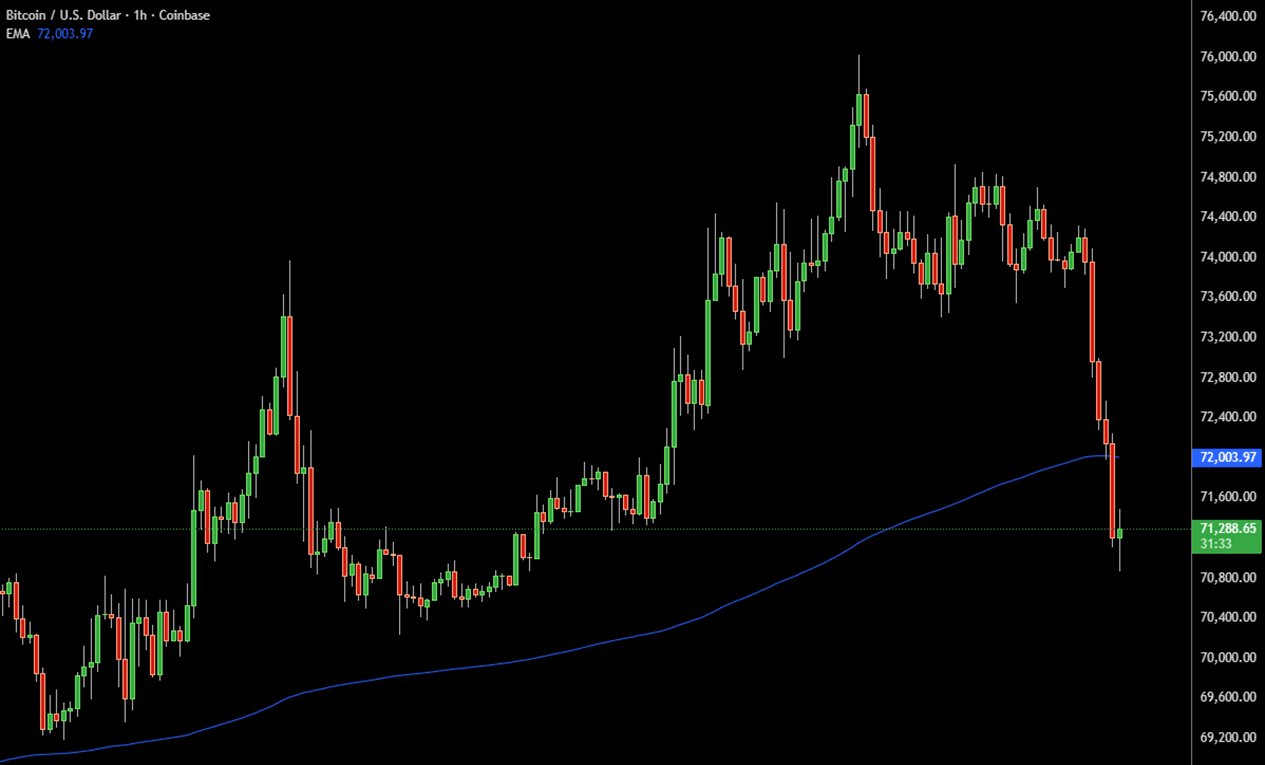
A typical EMA chart view overlays the EMA directly on price to show a smoother but more reactive trend line.
EMA reacts faster than SMA, but it is still based on past data and remains a lagging tool.
Using EMA alone can create incomplete context if momentum, volatility, or participation are ignored.
Compare trend-framing tools with momentum context.
See how other indicator categories answer different questions from moving averages.
Consensus Engine keeps EMA-style trend inputs alongside broader signals so traders can judge whether recent trend bias agrees with the rest of the market view.
That makes reactive moving averages more useful than checking them alone.
Consensus Engine keeps trend, momentum, volatility, and participation tools together instead of scattering them across separate views.
M5 through D1 stay visible together, which helps traders compare short-term movement with broader context.
TRUE CVD adds another confirmation layer when traders want more than price-based indicators alone.
EMA smooths price and gives more weight to recent candles to show trend direction more reactively.
Yes. EMA usually reacts faster than SMA because it weights recent price more heavily.
Because EMA is useful for trend structure, but it still needs momentum, volatility, or participation context.
Consensus Engine helps traders organize EMA, related indicators, and multi-timeframe context in one structured dashboard.